Responsible elephant tourism begins with a simple principle: the elephant should retain choice.
Whether you are watching a wild family from a vehicle, visiting a rescue centre or travelling through an elephant landscape, the experience should not depend on forcing the animal into proximity, performance or contact.
Wild elephants first
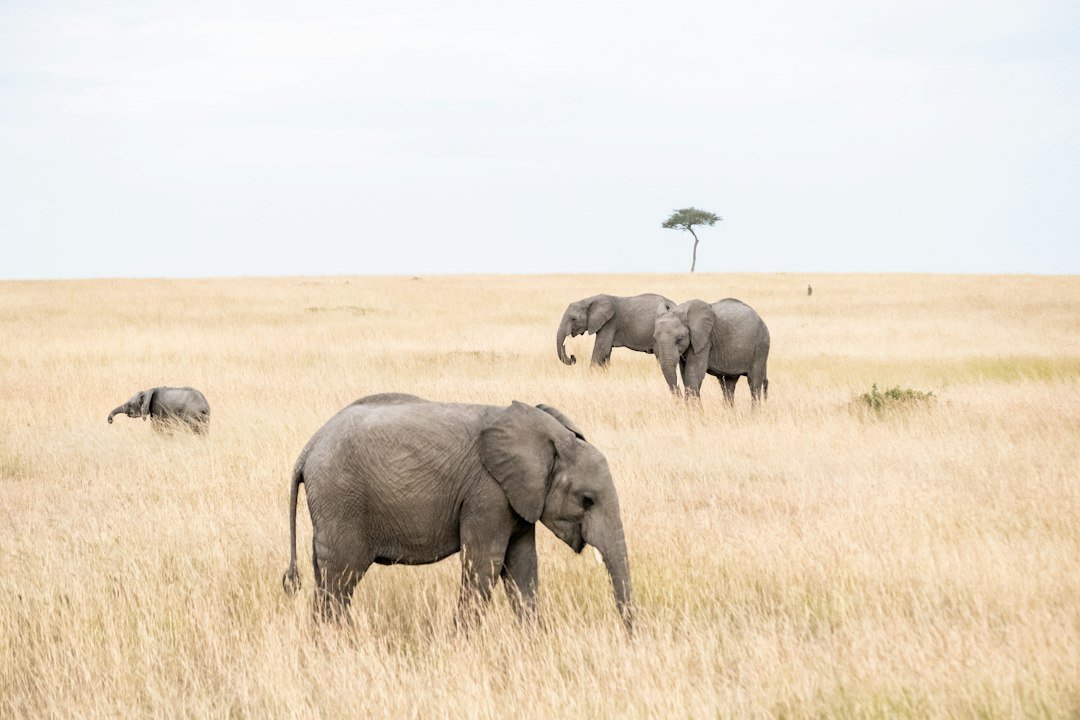
For travellers interested in natural elephant behaviour, free-ranging elephants offer the most meaningful experience.
The animal decides where to go, what to eat, whom to associate with and whether to move away.
Why proximity is not the goal
Tourism marketing often treats closeness as quality.
With elephants, the better measure is whether the animal can continue behaving normally.
A family feeding calmly at 30 metres may provide a far better experience than a forced encounter at five.
Vehicle positioning
Vehicles should not block elephant crossings, crowd calves or surround a family from several directions.
Good guides anticipate where animals are trying to move and leave that route open.
Why crowding matters
Several vehicles can change the behaviour of a sighting even when elephants remain physically present.
Repeated head turns, hesitation, route changes or clustering around calves can signal that the animals are responding to pressure.
Habituated does not mean unaffected
Elephants in popular reserves may be accustomed to vehicles.
That tolerance should not be interpreted as permission to crowd or block them.
Calves need space
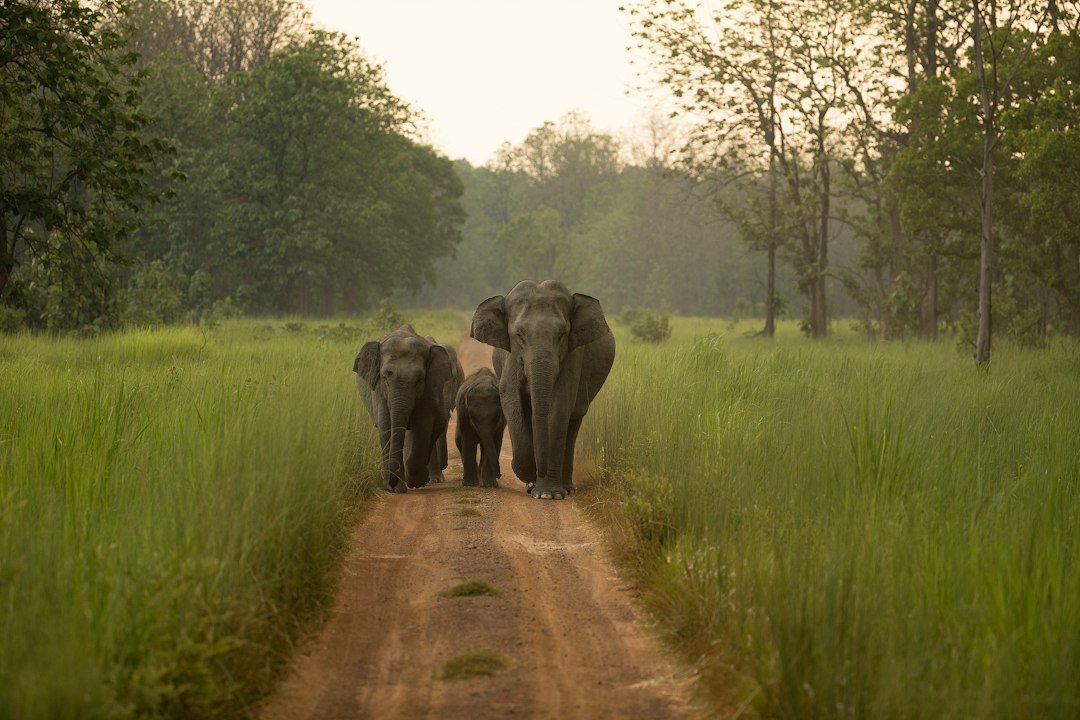
A vehicle should never position itself between a calf and adults.
Family groups can become defensive when movement is restricted.
Musth bulls
Adult bulls in musth may be more assertive and strongly motivated to move.
Experienced guides recognise temporal-gland secretion, urine dribbling and other signs and give the animal additional space.
What good guiding looks like
A strong elephant guide can read movement, family structure and reproductive state.
They know when to wait, when to reposition and when to leave a crowded sighting altogether.
Why several drives are better than one rushed encounter
Time reduces pressure.
If travellers have multiple drives, there is less temptation to chase one sighting aggressively or force a photograph before the opportunity disappears.
Boat-based viewing
In places such as Chobe or Periyar, boats can provide a different and often quieter angle.
They can be excellent for observing drinking, swimming and shoreline behaviour.
Responsible operators still need to avoid blocking crossing routes.
Walking near elephants
Walking encounters should happen only under authorised conditions with highly experienced guides.
Approaching elephants on foot merely to get closer is unsafe and unnecessary.
Captive elephant tourism
Captive experiences require a different set of questions.
Rides, bathing, feeding on command and photo posing all depend on controlling the elephant’s behaviour for visitors.
That should be recognised clearly rather than disguised by ethical branding.
Why “sanctuary” is not a guarantee
The word sanctuary is not a universal welfare certification.
A facility may use it while still offering rides, bathing or close-contact experiences.
Travellers need to look at daily management, not the label.
Riding
Elephant-back rides require the animal to carry people on command and follow a controlled route.
For travellers seeking a welfare-led experience, that is fundamentally different from passive observation.
Bathing
Bathing is often marketed as a gentle alternative to riding.
But elephants do not naturally line up on cue so tourists can scrub them.
If the activity depends on repeated positioning and contact, the visitor experience is still driving the elephant’s behaviour.
Feeding
Hand-feeding can seem harmless, but frequent tourist feeding can shape behaviour and create crowding.
Ask how much of the elephant’s day revolves around visitor food.
Photo posing
An elephant repeatedly positioned for photographs is performing a controlled behaviour for human convenience.
The more scripted the encounter, the less meaningful any claim of free choice becomes.
Chains and restraint
Some captive systems use chains for specific veterinary or safety reasons.
The important questions are how often, how long and under what conditions restraint is used.
Prolonged or permanent chaining is very different from brief controlled restraint.
Protected contact
Modern elephant management increasingly uses protected-contact systems in which barriers separate keepers from elephants during routine care.
This can reduce reliance on force while still allowing medical training and husbandry.
Veterinary care
Captive elephants need structured veterinary programmes.
Foot problems, arthritis, obesity and chronic injuries can become serious welfare issues over time.
Foot health
Hard surfaces and limited movement can contribute to foot disease.
Varied substrate, regular movement and appropriate foot care are important.
Social contact
Elephants are social animals.
Where compatible, they should have meaningful social opportunities rather than spending most of their lives isolated.
Space
A large property is not enough if elephants are confined to a small part of it.
Ask how much space the animals actually use and whether they can choose distance from visitors.
Handler welfare
Elephant welfare cannot be separated from mahout and keeper welfare.
Staff need training, stable employment, safety systems and realistic workloads.
Why “rescued” is not the whole story
An elephant may genuinely have come from poor conditions and still live in a facility with welfare limitations.
Rescue history explains why the elephant is there; it does not automatically prove that current management is excellent.
Transparency
Credible facilities should be able to explain where elephants came from, how they are managed and what happens outside visitor hours.
Emotional rescue stories are not a substitute for verifiable welfare information.
Breeding
A rescue-focused facility should be able to explain why breeding occurs, if it does.
Producing additional captive elephants creates future welfare obligations rather than solving the original rescue problem.
Wild viewing in India
India offers strong wild-elephant viewing in Nagarhole, Kabini, Bandipur, Periyar, Corbett, Rajaji and Kaziranga.
The experience varies by habitat, season and tourism zone.
Wild viewing in Africa
Amboseli, Samburu, Tsavo, Chobe, Tarangire, Hwange and other landscapes each reveal different aspects of elephant ecology.
Some are strongest for family behaviour, others for large aggregations, old bulls or wide-ranging movement.
Why destination quality is not the same as sighting frequency
A place with many elephants can still produce poor viewing if vehicles crowd every sighting.
A quieter destination may produce fewer encounters but allow much better observation.
Tourism and conservation value
Tourism can support jobs, conservancies and wildlife value on land that might otherwise be converted.
That potential benefit depends on how revenue reaches local communities and how wildlife pressure is managed.
Community benefit
People living with elephants often bear crop loss, property damage and safety risks.
Tourism is more defensible when communities receive meaningful economic benefit from keeping wildlife on the landscape.
Why local guides matter
Experienced local guides often know individual elephants, movement routes and seasonal patterns.
That knowledge improves both interpretation and responsible positioning.
Photography ethics
Good elephant photography does not require forcing proximity.
Behaviour, family interaction and environmental context often produce stronger images than a tightly cropped close-up.
What to watch for
Responsible observers pay attention to the elephant’s response:
- Does the animal keep feeding?
- Can it cross freely?
- Are calves being shielded?
- Is the family changing route because of vehicles?
- Is a bull in musth?
- Is the sighting becoming crowded?
When to leave
Leaving a sighting can be the responsible choice.
If elephants become boxed in or repeatedly change behaviour because of tourists, more time and more proximity are not automatically better.
Why no ethical operator should guarantee a wild elephant
A guaranteed encounter implies control.
Wild elephants move according to their own priorities.
A responsible operator can improve the odds through good planning but cannot guarantee a particular animal on a particular drive.
2026: close-contact tourism under scrutiny
A fatal incident at Dubare Elephant Camp in Karnataka renewed attention on the risks of close-contact elephant tourism.
Safety and welfare overlap because placing tourists within touching distance depends on strong behavioural control of very large animals.
The simplest test for travellers
Ask whether the experience still works if touching is removed.
If the visit remains worthwhile through observation, explanation and distance, the elephant is less likely to be functioning mainly as an activity.
Why responsible tourism should consider cumulative pressure
One respectful vehicle may have little effect, but dozens of vehicles repeating the same close approach every day can create chronic disturbance.
Management therefore has to consider total tourism pressure rather than judging each encounter in isolation.
Why visitor rules need enforcement
Written guidelines are useful only when guides, operators and reserve managers apply them consistently.
Clear limits on approach distance, vehicle numbers and blocking behaviour help turn ethical intentions into predictable practice.
Why welfare should be judged across the whole day
A captive elephant may appear calm during a short visitor session while spending many other hours restrained or isolated.
Responsible evaluation therefore looks beyond the tourist-facing moment to housing, movement, social contact and management outside opening hours.
Why tourism standards need to be destination-specific
Vehicle density, road layout, habitat openness and elephant habituation differ sharply between reserves.
Responsible-tourism rules should therefore respond to local conditions rather than relying on one universal approach distance or encounter format.
Why educational value matters
The strongest elephant experiences help visitors understand behaviour, habitat and conservation rather than simply producing a photograph.
Interpretation can turn a short sighting into a much deeper understanding of family structure, movement and welfare.
Why ethics should survive commercial pressure
Guides and operators may face strong incentives to deliver close sightings or direct interaction.
Responsible tourism requires systems that support guides when they choose distance, patience or leaving a crowded sighting instead.
Why responsible tourism should reward restraint
The best operators are willing to accept a more distant or shorter sighting when that is what the elephant needs.
Tourism becomes more ethical when commercial success is not tied to forcing maximum proximity.
Explore responsible elephant travel
Where to See Elephants in Africa → — scheduled for 9 February 2027
Elephants in Kenya → — scheduled for 29 January 2027
Where to See Wild Elephants in India → — scheduled for 17 November 2026
Elephant Sanctuary in India → — scheduled for 20 October 2026
Elephant Safari in India → — scheduled for 30 March 2027