Elephant DNA forensics connects two very different places: the field site where an elephant leaves dung on a forest trail, and the port or warehouse where illegal ivory is later seized.
The basic idea is straightforward. Researchers build a geographic reference map of elephant genetic variation from samples of known origin. DNA extracted from seized tusks can then be compared with that map to estimate where the ivory most likely came from.
Why genetics changed ivory investigations
Before geographic DNA assignment, a large seizure could reveal where ivory was intercepted without showing where the elephants had actually been killed.
Genetics created a biological link back toward the source population.
The reference map comes first
A forensic assignment is only as strong as the database behind it.
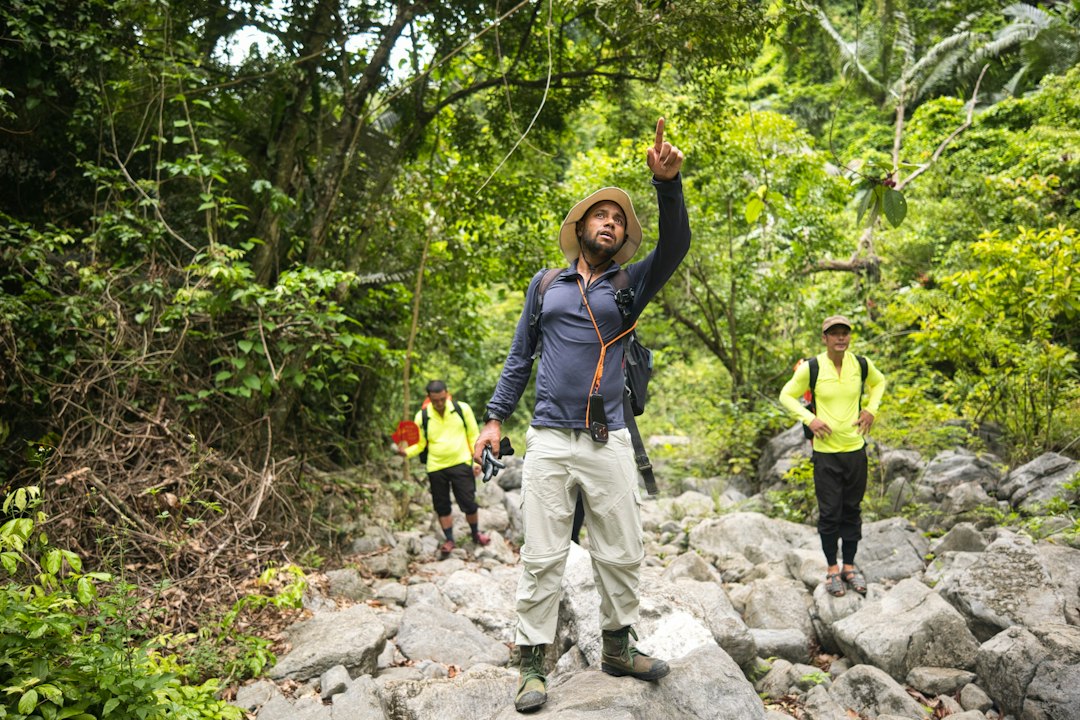
Researchers collect dung, tissue and other biological material from elephants whose geographic origin is known. These samples are genotyped and used to map how genetic variation changes across elephant range.
That map becomes the comparison framework for unknown ivory.
Why dung is so valuable
Fresh dung contains intestinal cells from the elephant that produced it.
Those cells carry DNA, which means researchers can sample wild elephants without capturing, darting or even seeing them.
This is especially important for forest elephants living under dense canopy.
Field metadata matter as much as the sample
A dung sample without reliable location data is far less useful for geographic assignment.
Researchers need precise coordinates, date, sample identity and careful field notes.
The genetic sequence answers “what DNA is here?” The metadata answer “where did this DNA come from?”
How seized ivory is sampled
Investigators remove a small portion of ivory under controlled conditions.
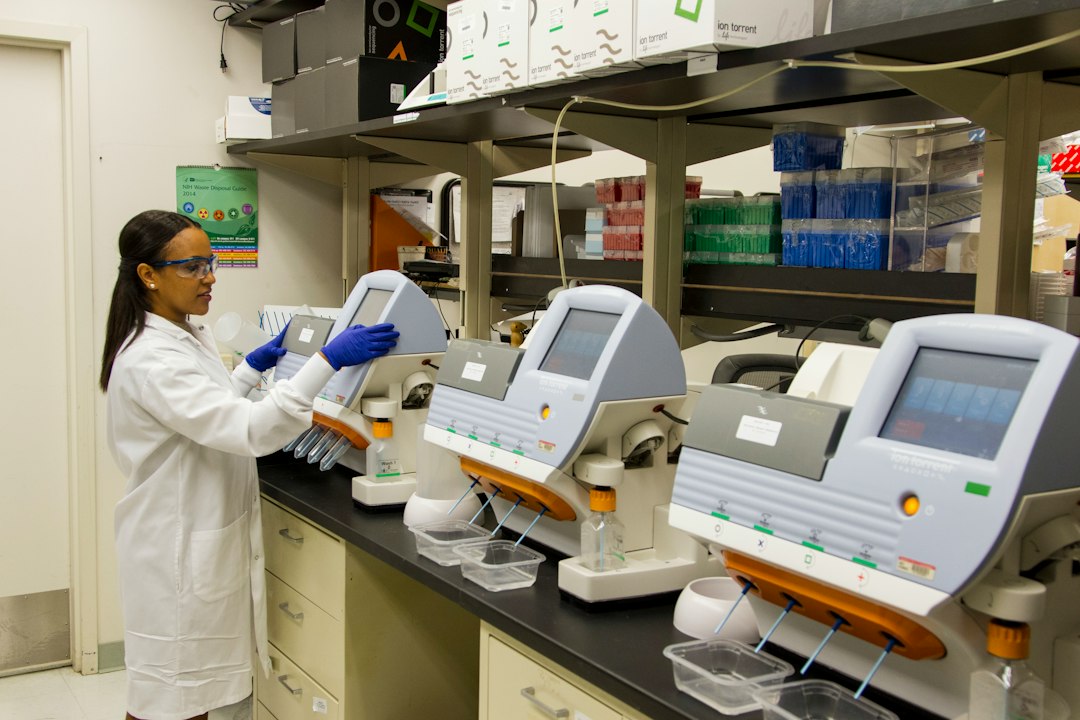
DNA is extracted, amplified and analysed using validated genetic markers.
The unknown profile is then compared with the geographic reference database.
What the result looks like
The result is not an exact kill-site location.
It is usually a probability surface or regional assignment showing where the elephant most likely originated.
The level of precision depends on how well the relevant region is sampled and how genetically distinct neighbouring populations are.
Why forensic assignments are probabilistic
Genetic variation changes gradually across landscapes.
Political borders do not necessarily align with biological population boundaries.
Responsible forensic reporting therefore includes uncertainty rather than presenting one precise point on a map.
Forest elephants and savanna elephants
African forest and savanna elephants are distinct species with different geographic ranges and population histories.
Forensic reference systems therefore need to account for species identity as well as regional genetic variation.
This is one reason broad continental sampling matters.
What happens when a region is poorly sampled?
Assignments become less precise.
If reference samples are abundant in one country and sparse in a neighbouring landscape, the forensic model may have difficulty distinguishing the two.
Filling geographic gaps can therefore improve the value of many future cases.
Why remote field expeditions matter
Remote regions are often under-sampled precisely because they are difficult to reach.
That can make one successful field expedition disproportionately valuable.
The original Elephant Ivory Project’s 2011 work in the Democratic Republic of the Congo was connected to this problem: seeking viable elephant dung from a poorly represented part of the TL2/Lomami landscape.
From reference sample to future seizure
A sample collected in the forest may not become operationally useful immediately.
Years later, ivory from an unknown seizure may be compared against the same reference database.
This delayed connection is part of how forensic systems work.
Matching paired tusks
Geographic assignment is only one use of DNA.
Because each elephant has two tusks, researchers can test whether tusks found in separate seizures came from the same individual.
A genetic match can connect consignments that originally appeared unrelated.
Why paired-tusk matching is powerful
If matching tusks are found in different shipments, investigators gain evidence that the consignments passed through overlapping trafficking networks.
When several seizures are linked this way, a much larger picture can emerge.
From one seizure to a network
Once forensic links appear, investigators can compare dates, ports, companies, shipping routes and known suspects.
This turns DNA from a source-assignment tool into a network-analysis tool.
The strongest investigations combine both approaches.
DNA does not replace conventional investigation
Genetic evidence cannot identify every actor in a trafficking chain.
Investigators still need shipping documents, phones, financial records, witnesses, container histories and other evidence.
Forensics strengthens that investigation rather than replacing it.
Chain of custody
Every forensic sample has to remain traceable from seizure to laboratory.
If investigators cannot prove which tusk a sample came from, who handled it and how it was stored, the result may become difficult to use legally.
Evidence management is therefore part of the science.
Why laboratory quality control matters
Ivory DNA can be degraded or present in small quantities.
Laboratories use replicate testing, controls and validated protocols to reduce error.
Forensic conclusions need to be reproducible because they may later be scrutinised in court.
Microsatellites and genomic methods
Earlier elephant forensics relied heavily on microsatellite markers.
Newer genomic approaches can provide denser information across the genome.
The analytical tools continue to improve, but the basic logic remains unchanged: compare unknown ivory with geographic variation from known elephants.
Can DNA identify an individual elephant?
Yes, when enough informative markers are available.
That is what makes paired-tusk matching possible.
Individual identification can also be used in non-invasive population studies based on dung.
Can DNA tell when an elephant was killed?
Not directly.
Genetics can identify individual relationships and likely geographic origin, but precise time of death requires other evidence.
Can DNA identify the poacher?
No.
DNA from the elephant does not identify the person who killed it.
What it can do is point investigators toward the source landscape and reveal links between seizures.
How genetics helps field protection
If several major seizures repeatedly trace to the same region, wildlife authorities can focus protection effort on that landscape.
This moves enforcement upstream from the port where the ivory was found toward the place where elephants are actually dying.
How genetics helps trafficking investigations
If paired tusks, source regions and shipping routes recur across several consignments, investigators can identify repeat network structure.
This is far more useful than treating each seizure as a completely separate event.
Why data sharing matters
Ivory trafficking crosses borders.
Reference databases, seizure information and investigative intelligence therefore become more powerful when agencies and research teams can compare cases across jurisdictions.
Why exact elephant locations are sensitive
Reference data and movement records can include locations of vulnerable populations or known tuskers.
Scientific openness has to be balanced against the security risk of publishing information that could help illegal hunters.
DNA and population monitoring
The same genetic methods used to support ivory forensics can also identify individual elephants from dung, estimate abundance, measure relatedness and study connectivity.
That means forensic science and conservation biology share much of the same field infrastructure.
Why this site preserves the original project
The original Elephant Ivory Project connected expedition storytelling with this reference-map problem.
Its value was not that one expedition invented elephant forensics. It contributed field sampling and public communication to a much larger scientific effort led by many researchers over many years.
The bigger forensic chain
Elephant DNA forensics works only when three systems connect:
- field teams collect well-documented reference samples
- laboratories produce reliable genetic analysis
- enforcement agencies use the results in investigations and protection
A weakness in any one stage reduces the value of the others.
Why the method matters
A seized tusk is not only contraband.
It can still contain information about an individual elephant, a source population and potentially a trafficking network.
DNA forensics turns that biological evidence into something investigators can use.
Why forensic science depends on collaboration
No single laboratory or field team can maintain a complete geographic reference map alone.
Samples collected across countries and landscapes become far more powerful when methods, metadata and analytical standards are compatible.
Why reference databases need maintenance
Population structure can be reinterpreted as genomic methods improve, and new samples may fill gaps that were previously ambiguous.
A forensic map should therefore evolve with better data rather than remain frozen at the point it was first built.
Why negative results are useful
Not every ivory sample produces enough DNA for a strong assignment.
Reporting those failures helps laboratories understand which sampling, storage or extraction methods need improvement and prevents weak results from being overstated.
Why forensic evidence is strongest when independently supported
Genetic assignment is most persuasive when shipping records, intelligence and seizure history point in compatible directions.
Independent lines of evidence reduce the risk of building an investigation around one uncertain result.
Why forensic databases benefit from historical samples
Older reference material can help reconstruct population structure before recent declines or fragmentation.
That historical context may improve interpretation when modern ivory is compared with populations that have changed over time.
Why sample provenance should survive laboratory transfer
Reference material may move between field teams, museums and laboratories.
Its scientific value depends on keeping original location, date and collection records attached throughout that chain.
Why forensic methods need courtroom clarity
A technically sophisticated analysis is not enough if investigators and courts cannot understand what the result does and does not prove.
Clear reporting of source probability, uncertainty and chain of custody is therefore as important as analytical precision.
Why reference maps are conservation infrastructure
A geographic DNA database may look like a research product, but it becomes operational infrastructure when future seizures depend on it.
Maintaining sample quality, metadata and analytical compatibility therefore has value far beyond the original study.
Explore this topic
Elephant Dung DNA → — scheduled for 11 December 2026
How Scientists Trace Illegal Ivory → — scheduled for 4 December 2026
Ivory Trafficking Routes → — scheduled for 5 March 2027
The Original Elephant Ivory Project →
Sources
Wasser et al. — Genetic assignment of seized elephant ivory
Wasser et al. — Linking multiple large ivory seizures