Elephant behaviour makes sense only when it is viewed across an elephant’s full social and ecological world. Family life, memory, communication, feeding, movement, play, aggression and reproduction are not separate topics. They interact constantly.
Elephants are long-lived social mammals. Much of what they do is shaped by relationships, accumulated experience and the need to move through large, changing landscapes.
Family life
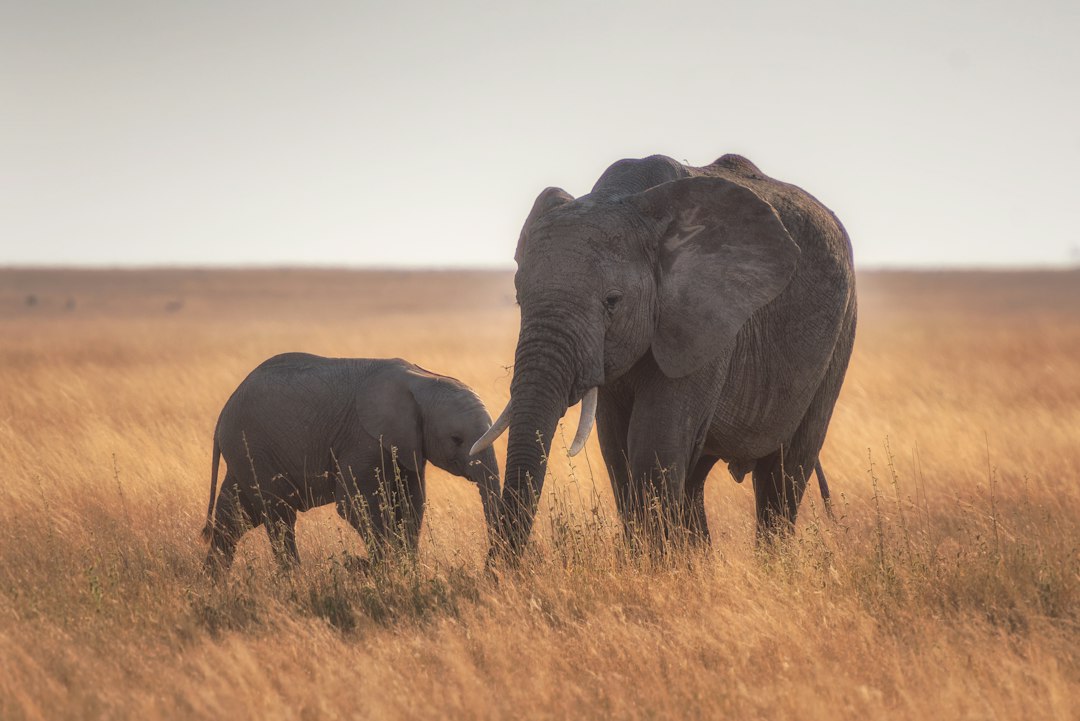
Female elephants usually live in family groups centred on related females and their offspring.
These groups are flexible rather than permanently fixed. Families can split into smaller units and reunite later depending on food, water and social context.
Matriarchs
The oldest female is often called the matriarch.
Her importance comes from experience rather than command.
Older females may recognise more social partners, remember rare environmental events and influence family responses to unfamiliar situations.
Calves
Elephant calves grow up inside a network of mothers, sisters, aunts and other young elephants.
They learn by following adults, exploring objects, practising trunk use and participating in social interactions.
Allomothering
Females other than the mother may help guard, touch and guide calves.
This allomothering can give younger females experience before they reproduce themselves.
Fission-fusion society
Elephant families do not always travel as one visible unit.
Subgroups may separate and later reunite while remaining socially connected.
This flexible organisation is called fission-fusion society.
Communication
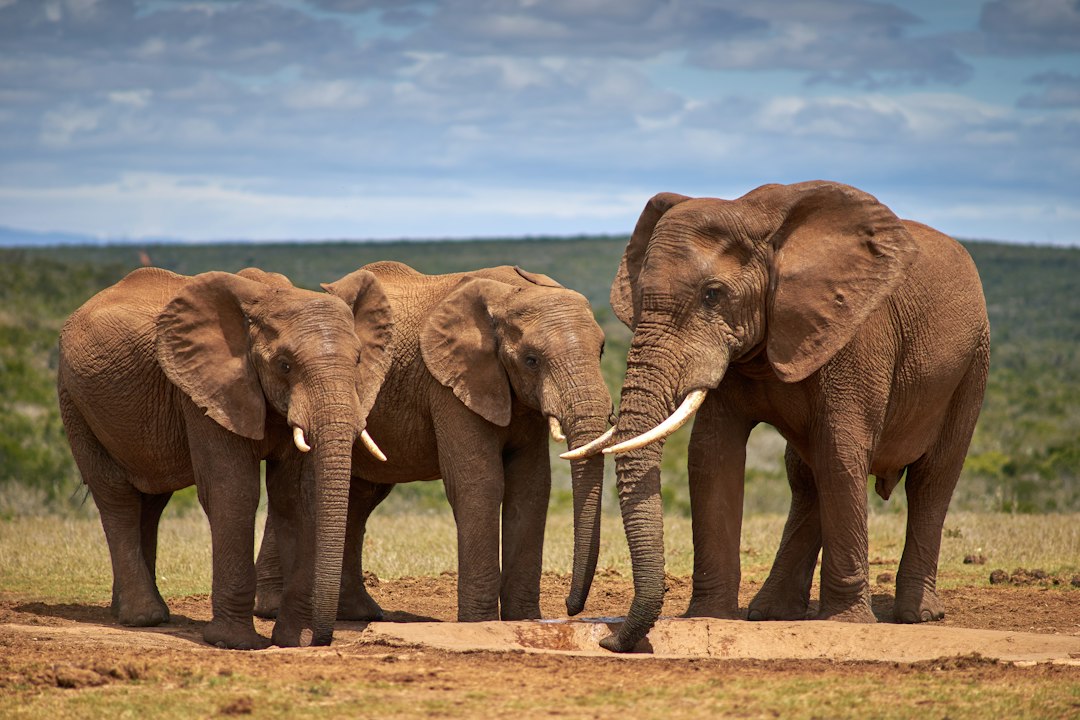
Elephants communicate through sound, touch, smell, posture and vibration.
No single channel explains the system.
A rumble, trunk touch and body orientation may all occur in the same social interaction.
Rumbles
Low-frequency rumbles are used in contact, greeting, reassurance, reproduction and coordination.
Some components fall below normal human hearing.
Trumpets and louder calls
Trumpeting often occurs during excitement, alarm or intense social activity.
Context matters: a trumpet is not a one-word signal with one fixed meaning.
Touch
Trunk contact is central to greeting, reassurance and investigation.
Elephants touch mouths, faces, bodies and reproductive areas depending on context.
Smell
Olfaction is one of the elephant’s most important senses.
Urine, dung and gland secretions can provide information about identity, reproductive condition and recent presence.
Seismic communication
Elephant calls and movement can generate vibrations through the ground.
Research suggests elephants can detect some of these signals through the feet and body.
Memory
Elephants show strong long-term memory in social, spatial and olfactory contexts.
They can recognise familiar individuals, remember routes and retain information about important resources.
Why memory matters
A long-lived animal may encounter severe drought, unusual danger or distant water only rarely.
Remembering those events can become valuable years later.
Social recognition
Elephants distinguish familiar and unfamiliar individuals and respond according to past relationships.
Long-term social memory supports the flexible family networks seen in wild populations.
Spatial memory
Elephants can use very large landscapes.
Repeated route use suggests a detailed knowledge of water, feeding areas, crossing points and seasonal range.
Intelligence
Elephants show sophisticated problem-solving, cooperation, memory and body awareness.
But intelligence should not be reduced to one score or ranked simplistically against other species.
Problem-solving
Controlled studies have tested whether elephants can manipulate objects, negotiate barriers and solve practical tasks.
Results vary among individuals and depend heavily on the design of the task.
Cooperation
Elephants have demonstrated the ability to coordinate actions with another elephant when success requires both partners.
This fits naturally with the demands of social life.
Mirror self-recognition
Asian elephants have produced evidence consistent with mirror self-recognition.
This is interesting, but the mirror test should not be treated as a universal measure of self-awareness.
Inhibitory control
Recent experiments have tested whether elephants can suppress an immediate response in order to solve a task.
Performance differs between individuals, showing again why one test cannot define “intelligence.”
Feeding
Elephants spend much of the day eating.
Diet can include grasses, leaves, bark, roots, fruit, branches and crops.
The balance changes with species, habitat and season.
Seasonal diet shifts
Fresh grass may dominate after rain, while woody browse becomes more important in dry periods.
Forest elephants rely more heavily on fruit and browse.
Feeding changes landscapes
Elephants break branches, strip bark, knock over trees and disperse seeds.
These behaviours can reshape vegetation and create habitat for other species.
Seed dispersal
Forest elephants are especially important long-distance seed dispersers.
They can carry large seeds through rainforest and deposit them far from parent trees.
Movement
Elephants move in response to food, water, social relationships, reproduction and risk.
Some populations make clear seasonal migrations. Others use wide home ranges without one fixed migration route.
Water
In dry ecosystems, water can organise movement across enormous areas.
Drought may force elephants to travel farther or concentrate around permanent sources.
Corridors
Repeated movement between habitat blocks creates functional corridors.
When these routes are blocked, elephants may enter farms, settlements or dangerous infrastructure.
Male behaviour
Adult males leave female family groups as they mature but do not become socially irrelevant.
Bulls form associations with other males and may learn from older individuals.
Musth
Musth is a normal reproductive state in adult males associated with hormonal changes, temporal-gland secretion and urine dribbling.
It alters movement, dominance and interest in females.
Why musth is misunderstood
Musth is often described as “madness” or simple aggression.
That is inaccurate.
It is a structured reproductive state with clear signals other elephants can recognise.
Female reproductive behaviour
Females advertise reproductive condition through chemical and behavioural cues.
Bulls may follow families and investigate urine to assess whether a female is approaching oestrus.
Play
Calves and juveniles engage in chasing, mock charges, trunk wrestling and sparring.
Play helps develop coordination and social skills.
Aggression
Elephant aggression can involve posture, vocalisation, displacement and physical contact.
Many conflicts are resolved through signalling before serious fighting occurs.
Why posture matters
Head position, ear position, body angle and movement speed can all communicate intent.
Experienced observers read the whole animal rather than one dramatic gesture.
Responses to people
Elephants learn from human encounters.
They may distinguish risky places, vehicles or voices and alter their timing or route accordingly.
Nocturnal movement
In heavily disturbed landscapes, elephants may become more active at night.
This can reduce daytime contact with people but increase danger when encounters occur in darkness.
Responses to death
Elephants show prolonged interest in dead elephants, bones and distressed companions.
These behaviours are socially complex, but researchers are cautious about assigning specifically human concepts such as mourning without further evidence.
Stress and disturbance
Vehicle crowding, tourism, habitat disruption and human pressure can alter behaviour even when elephants do not visibly flee.
Changes in movement, spacing or communication may occur first.
Why behaviour is context-dependent
The same elephant can behave very differently depending on age, reproductive state, family presence, habitat and recent experience.
One encounter should never be treated as the animal’s permanent personality.
Why long-term observation matters
Many behaviours make sense only when researchers know the individual’s history.
A known matriarch, bull or family can be interpreted in ways an anonymous sighting cannot.
Behaviour and conservation
Behaviour often reveals conservation problems before population decline becomes visible.
A corridor used only at night, a family avoiding a road or repeated crop-raiding can all signal pressure in the landscape.
What visitors can learn
Watching elephants becomes richer when you stop asking only “How close are they?”
Notice who follows whom, which calf stays beside which adult, what the trunk is doing, where the animals are trying to move and how they respond to vehicles.
Behaviour is the story behind the sighting.
Why behaviour changes with age
A calf, adolescent, adult female and mature bull do not face the same social or ecological problems.
Behaviour therefore changes through life as elephants learn routes, enter new social roles, reproduce and accumulate experience.
Why behaviour should be compared across individuals
Elephants have consistent tendencies as well as flexible responses.
Some individuals are bolder, more exploratory or more tolerant of risk than others, which can influence conflict, movement and social interaction.
Why behaviour is useful as an early warning signal
Changes in route use, vigilance, calling or time of activity may appear before mortality or population decline.
Behavioural monitoring can therefore reveal pressure while managers still have time to intervene.
Why social learning matters
Young elephants acquire information by following older animals and observing how they respond to food, threats and other elephants.
This means behaviour is shaped by both individual experience and the social environment in which an elephant grows up.
Why elephant behaviour should be studied across entire life stages
Calves, adolescents, breeding females and old bulls face different social and ecological demands.
Following individuals through those stages helps researchers distinguish temporary age-related behaviour from stable individual tendencies.
Why context matters when interpreting aggression
A charge, displacement or threat display can arise from reproductive competition, calf defence, surprise or crowding.
Labeling all intense behaviour as “aggression” can obscure the underlying cause.
Why behaviour can reveal welfare problems
In captive settings, repetitive movement, social isolation or abnormal inactivity may indicate poor conditions.
Behavioural observation therefore matters to welfare assessment as well as wild-elephant ecology.
Why field interpretation improves with time
Experienced observers recognise patterns that are easy to miss during a short visit: who follows whom, which bulls are tolerated, how families react to vehicles and when movement begins to change.
That accumulated field knowledge remains one of the foundations of behavioural science.
Why repeated observation changes interpretation
One encounter can be misleading. Repeated observation shows whether a behaviour is habitual, seasonal, age-related or simply a response to an unusual event.
That is why long-term behavioural work is so valuable in a species that can live for many decades.
Explore elephant behaviour
Elephant Family Groups → — scheduled for 5 January 2027
Elephant Communication → — scheduled for 9 October 2026
Elephant Memory → — scheduled for 3 November 2026
Elephant Intelligence → — scheduled for 27 October 2026
Elephant Feeding Behavior → — scheduled for 12 February 2027
Elephant Movement and Migration → — scheduled for 16 February 2027
Elephant Musth →