India holds one of the world’s largest remaining populations of wild Asian elephants. But they do not live inside a neat network of isolated parks. They move through forests, plantations, river valleys, farms, railway corridors, highways and settlements across several major landscapes.
Understanding elephants in India therefore means understanding movement, coexistence and connectivity as much as protected areas.
Where India’s elephants live
Wild Asian elephants are concentrated in four broad regions:
- southern India and the Western Ghats
- the north-east
- central and eastern India
- the Terai–Shivalik belt
Each region has different habitat, rainfall, land use and conflict patterns.
Southern India
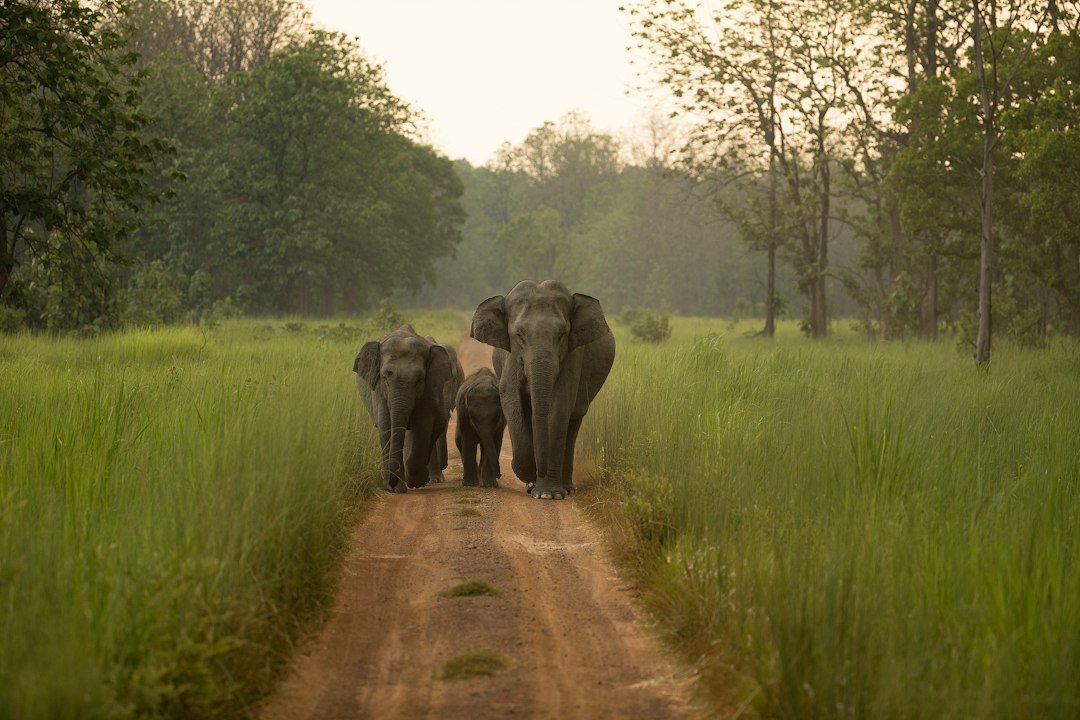
The Nilgiri–Eastern Ghats landscape supports one of the country’s most important elephant populations.
Nagarhole, Bandipur, Wayanad, Mudumalai and surrounding forests form a connected system across Karnataka, Kerala and Tamil Nadu.
Elephants move between these areas according to water, forage, season and disturbance.
Why the Nilgiri landscape matters
It is one of the clearest examples of why park-by-park conservation is insufficient.
An elephant may spend one week inside a national park and the next moving through reserve forest, plantation or private land.
Connectivity matters more than the administrative boundary.
Kabini and Nagarhole
Kabini is especially well known because receding reservoir margins can create open dry-season viewing.
Families and bulls may emerge from forest to feed near exposed shoreline, making behaviour easier to observe.
The wider ecological story, however, is movement across the entire southern landscape.
Bandipur, Mudumalai and Wayanad
These adjoining forests are part of the same larger system.
State boundaries change management jurisdiction, not elephant biology.
That makes inter-state coordination essential for corridors, conflict response and infrastructure planning.
Periyar
Periyar offers a wetter forest and reservoir landscape.
Elephants may be observed from boats and approved forest activities, but dense vegetation makes sightings less predictable.
This is a useful reminder that visibility is not the same thing as habitat quality.
The north-east
Assam, Arunachal Pradesh and neighbouring states support major elephant populations in forests, floodplains, foothills and plantation mosaics.
The region contains exceptional habitat but also intense pressure from roads, railways, settlement and land conversion.
Kaziranga
Kaziranga is famous for rhinoceros, but elephants are a major part of the ecosystem.
Open grassland and wetland can make them easier to observe than in dense forest.
Seasonal flooding also shapes where elephants move and when they leave lower ground.
Arunachal Pradesh
Arunachal contains large forested landscapes and complex elevation gradients.
Recent records of elephants at unusually high elevations have expanded the known picture of Asian-elephant habitat use.
These are scientifically important landscapes even where tourism is limited.
Central and eastern India
Odisha, Jharkhand, Chhattisgarh and West Bengal contain important elephant ranges and some of the country’s most difficult coexistence challenges.
Mining, industry, agriculture, roads and fragmented forests can combine to constrain movement severely.
The Terai–Shivalik belt
Uttarakhand and adjoining areas support elephants across Corbett, Rajaji and connected forest.
River systems, roads, railways, towns and foothill corridors all influence movement.
Corbett
Corbett is widely known for tigers but is also a major elephant landscape.
Elephants use river valleys, sal forest and grassland across a much wider system than the tourism core alone.
Rajaji
Rajaji is especially important for movement through a heavily human-influenced foothill landscape.
Transport infrastructure and settlement pressure make connectivity a major conservation issue.
Why corridors matter so much in India
Elephants are wide-ranging animals.
When routes between habitat blocks narrow or disappear, animals may be forced through villages, farms or dangerous infrastructure.
Corridors are therefore central to both conservation and conflict reduction.
India’s corridor assessments
National and regional assessments have identified major elephant movement connections across the country.
These maps are important planning tools but should be treated as dynamic.
Land use changes, and elephants can shift routes over time.
Human-elephant conflict
Conflict is one of the defining conservation issues for Asian elephants in India.
Crop loss, property damage, injuries and deaths create serious costs for communities living near movement routes.
Elephants are killed through retaliation, electrocution, train collisions and other human-related causes in return.
Why conflict is not evenly distributed
A small number of villages, railway stretches or corridor bottlenecks may experience repeated incidents.
Hotspot mapping therefore matters more than broad state-level averages.
Crop-raiding
Crops such as rice, maize, sugarcane and bananas can be highly attractive because they are concentrated and nutritious.
Some individuals may become repeat crop-raiders while others rarely enter farmland.
Individual behaviour matters.
Railways
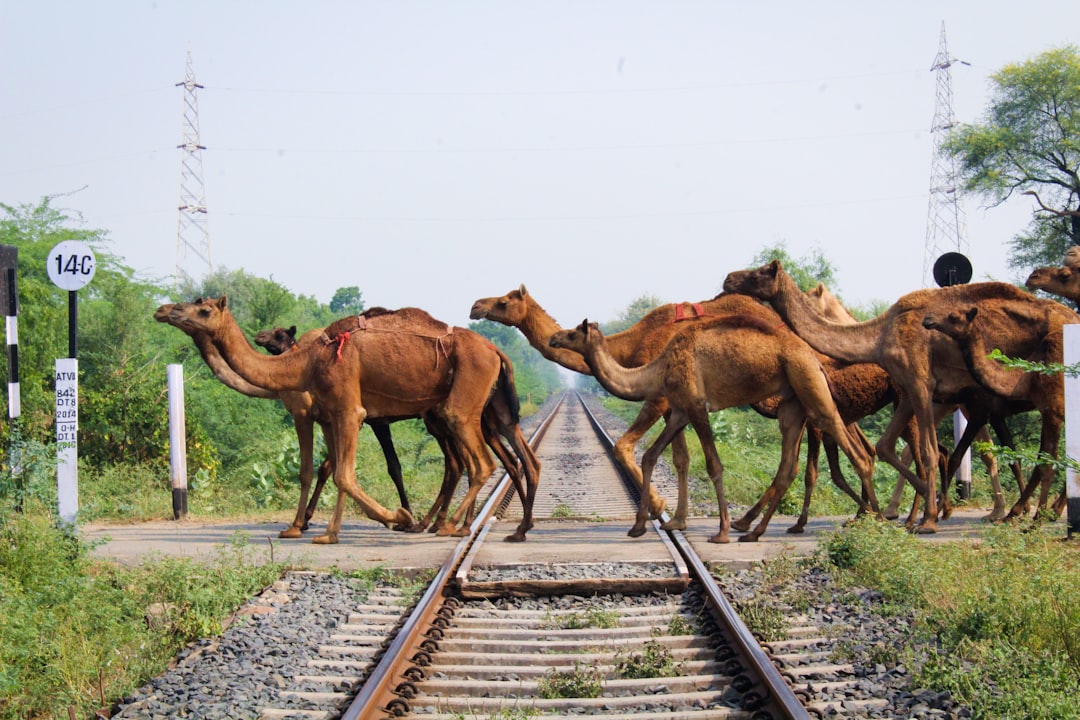
Railway collisions have killed elephants in several regions.
Risk is highest where tracks intersect regular movement routes.
Mitigation includes speed restrictions, detection systems, fencing, underpasses and route-specific monitoring.
AI-enabled detection
Indian Railways has been expanding systems designed to detect elephants approaching tracks and alert railway personnel.
These systems can improve immediate safety but do not replace the need for corridor protection and infrastructure planning.
Roads
Roads can fragment habitat, increase collision risk and alter crossing behaviour.
Even where elephants continue to cross, traffic volume and speed can change how and when they use the route.
Mining and industry
Mining can remove habitat directly and also create roads, settlements and new barriers.
The impact is especially serious where projects overlap narrow corridors or already fragmented ranges.
Plantations
Tea, coffee and other plantations can sometimes remain permeable to elephants.
They are not equivalent to natural forest, but they may still function as movement habitat between larger forest blocks.
Fencing, roads and human activity determine how usable they remain.
Elephants in coffee country
Research from Hassan, Karnataka, shows elephants navigating a mosaic of coffee estates, forest fragments, roads, reservoirs and settlements.
This is not a simple forest-versus-farm system.
It is a working landscape through which elephants continue to move.
Project Elephant
Project Elephant is the Government of India’s long-running national programme for elephant conservation.
Its remit includes habitat, corridors, conflict, monitoring and captive-elephant issues.
Recent work increasingly emphasises landscape-level planning and infrastructure risk.
Elephant Reserves
India’s Elephant Reserves recognise broader landscapes important to elephant populations.
They may include protected areas, reserve forests and other land within the same ecological system.
This is a more realistic scale for elephant management than a single park boundary.
Population monitoring
Elephants are counted using a combination of direct surveys, dung methods, genetics and other tools depending on habitat.
Population size alone is not enough. Managers also need information about movement, mortality, age structure and connectivity.
Genetics
Genetic sampling can reveal relatedness, population structure and isolation.
It can also help identify individual captive elephants and support broader forensic work.
Tracking
GPS and radio collars can reveal how elephants move through fragmented landscapes.
Tracking is especially useful for identifying corridors, conflict routes and infrastructure crossings.
Only a small number of animals can be collared, so the data need careful interpretation.
Captive elephants
India also has a large population of elephants under human management in temples, tourism facilities, camps, zoos and other settings.
Captive welfare is a different issue from wild-population conservation, but it remains part of the broader national elephant debate.
Wild versus captive viewing
For travellers interested in natural behaviour, a free-ranging elephant is fundamentally different from a captive animal used for rides, bathing or feeding.
The wild elephant chooses where to move and whom to associate with.
That autonomy is central to the experience.
Where travellers can see wild elephants
Practical destinations include Nagarhole and Kabini, Bandipur, Periyar, Corbett, Rajaji and Kaziranga.
Each offers a different habitat and different viewing conditions.
Why sightings cannot be guaranteed
Wild elephants move according to food, water, season, disturbance and social priorities.
A responsible operator can choose the right landscape and timing but cannot guarantee one specific encounter.
Climate and drought
Changing rainfall and heat can alter water, forage and movement.
Where routes are already constrained by roads and settlement, climate stress can intensify conflict.
Connectivity is therefore also a form of climate resilience.
What successful conservation requires
India’s elephant future depends on several things working together:
- large habitat blocks
- functional corridors
- safer infrastructure
- conflict hotspot management
- credible compensation and rapid response
- long-term population monitoring
- community participation
- land-use planning across state boundaries
Why the next decade matters
India still retains large wild elephant populations and major connected landscapes.
That is a major conservation advantage.
But roads, railways, settlement and industrial expansion can close movement routes far faster than elephants can adapt.
Protecting connectivity before it disappears is therefore one of the most important priorities.
Why elephant landscapes need inter-state coordination
Many Indian elephant populations cross state boundaries routinely.
Different compensation rules, infrastructure agencies and forest administrations can complicate response unless neighbouring states share movement and conflict information.
Why coexistence needs local design
A deterrent that works in one district may fail in another because crops, terrain, settlement patterns and elephant behaviour differ.
India’s scale makes local adaptation essential even within one national policy framework.
Why national success should be judged by connectivity as well as numbers
A large population fragmented into isolated blocks is less secure than the same population moving through connected landscapes.
Population size and landscape permeability therefore need to be assessed together.
Why elephant conservation in India is also a development-planning issue
New roads, railways, mines, power infrastructure and settlement can alter elephant movement long before population decline becomes visible.
Environmental planning therefore needs to consider connectivity before projects are built, not only mitigation after conflict appears.
Why elephant movement should inform zoning
Repeated routes, corridor bottlenecks and seasonal range can help identify where development pressure would create the greatest conservation cost.
Using movement data early is usually more effective than trying to restore connectivity later.
Why elephant policy needs to follow movement, not only boundaries
Elephants routinely cross the lines that divide states, reserves and administrative departments.
Policy is strongest when it reflects that ecological reality rather than expecting animals to remain inside human boundaries.
Explore elephants in India
Where to See Wild Elephants in India → — scheduled for 17 November 2026
Elephant Sanctuary in India → — scheduled for 20 October 2026
Elephant Safari in India → — scheduled for 30 March 2027
Elephant Conservation in India → — scheduled for 10 November 2026
Human-Elephant Conflict → — scheduled for 1 December 2026